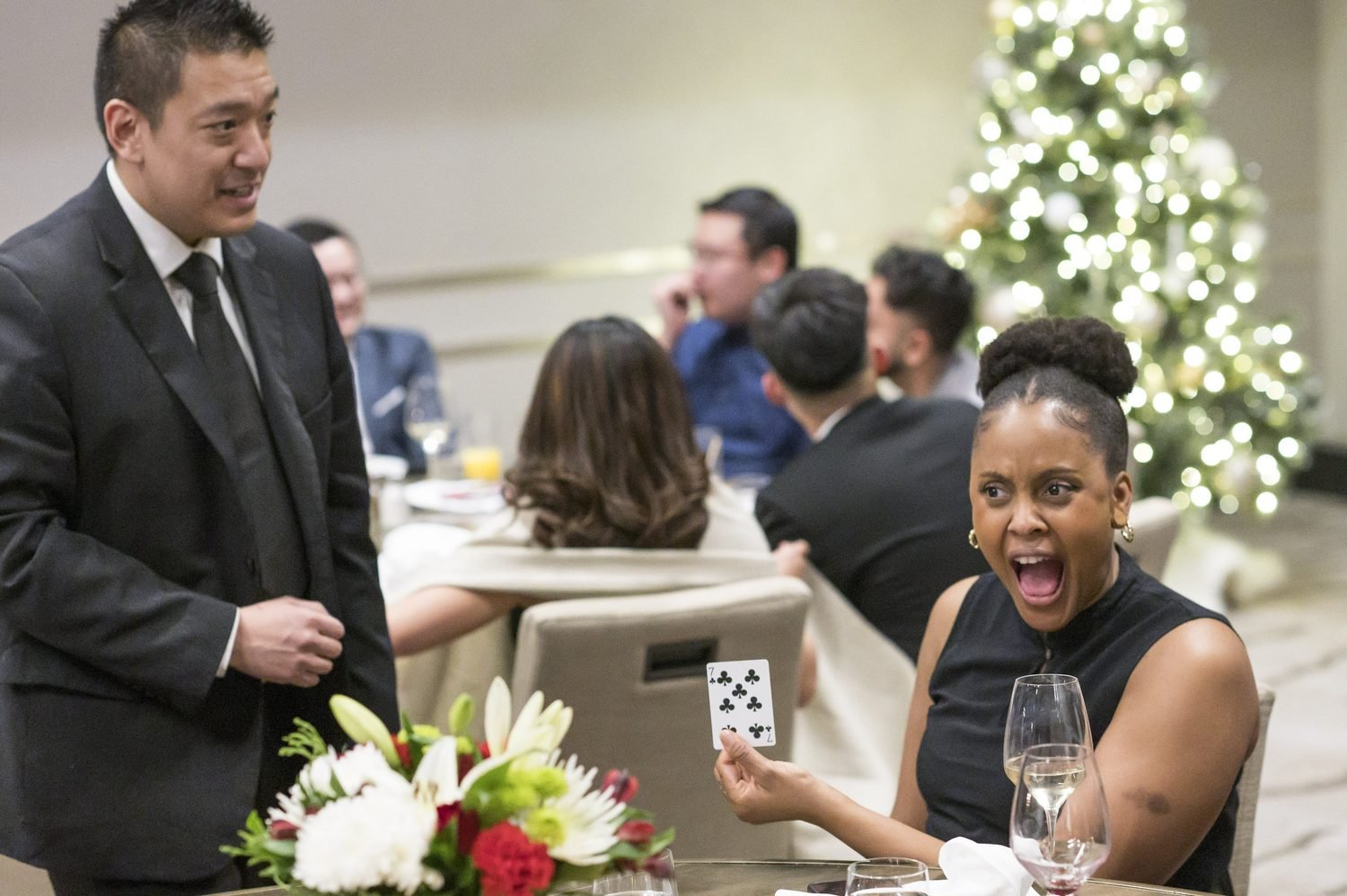
A dinner event has a rhythm. Guests arrive, settle in, talk at their tables, pause while courses are cleared, listen to remarks, and wait again before dessert or the next program moment. Those pauses can either feel flat, or they can become the moments guests remember.
John Ha’s close-up magic is built for those in-between windows. He can visit tables, create a short impossible moment, and leave the group laughing together before service needs the space again. The result is entertainment that supports the meal instead of competing with it.
Use the quiet gaps, not the busy service moments
The strongest dinner entertainment does not fight the room. It avoids active plate drops, wine service, toasts, and moments when guests are trying to eat. Instead, it fits into the parts of the evening where people are already available.
- After guests are seated but before the first course lands
- After appetizers are cleared and the room is waiting for mains
- During a relaxed dessert or coffee window
- After dinner, before awards, dancing, or a larger program moment
Those windows give guests something to enjoy while the event team keeps service moving behind the scenes.
Decide whether tables should be visited lightly or fully
For a shorter dinner or a room with many tables, John can touch the room lightly: a few high-impact moments that ripple through the space and give guests something to talk about. For a smaller private dinner, he can spend more time with each table so everyone feels included.
The right plan depends on guest count, table layout, schedule pressure, and whether the host wants magic to feel like a surprise accent or a central part of the evening.
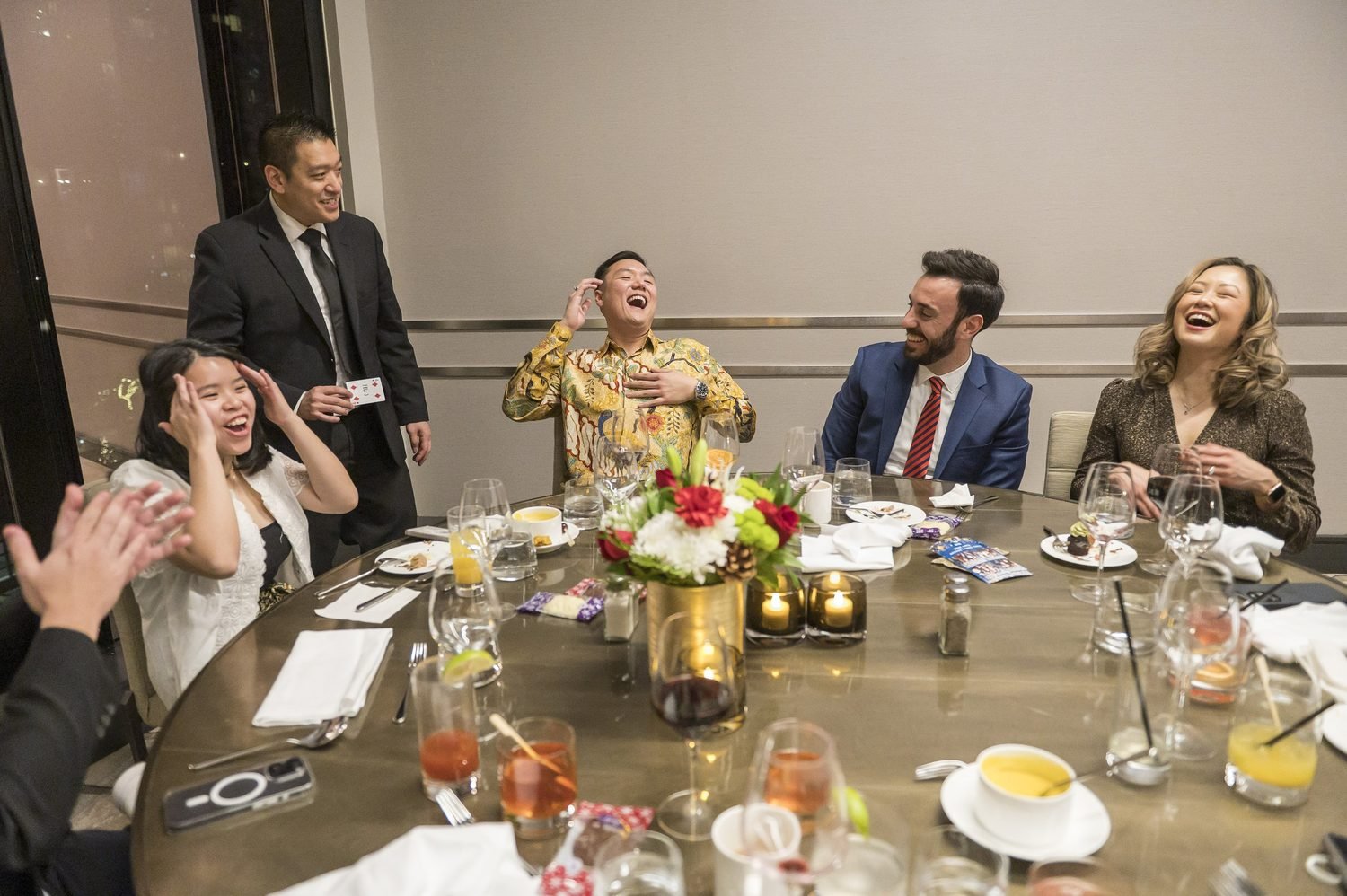
Protect speeches and sponsor moments
If the dinner includes remarks, awards, fundraising asks, or sponsor recognition, entertainment should make those moments easier to receive. Close-up magic can warm up tables before speeches begin, then pause cleanly when attention needs to move to the stage or host.
That matters for corporate and nonprofit events because the guest experience is not only about laughter. It is also about attention, timing, and making the program feel polished.
When a stand-up magic show makes sense after dinner
Close-up magic is excellent for tables and transitions. A stand-up magic show is better when the host wants everyone to share one focused highlight together. It can work after dinner, after awards, before a dance floor opens, or as a memorable close to a client or team event.
For many Vancouver dinners, the strongest structure is simple: close-up magic during arrival or early service gaps, then a compact stand-up magic show later when plates are cleared and guests are ready to look in one direction.
What to share when checking availability
When you inquire, include the date, venue, guest count, dinner style, approximate timeline, number of tables, and any fixed program moments. If speeches, awards, or a fundraising segment are important, mention those too.
Those details help John recommend whether between-courses close-up magic is enough on its own, or whether close-up magic plus a stand-up magic show would create a stronger arc for the evening.
Planning a Vancouver dinner event?
Send the venue, guest count, meal format, and schedule draft. John can help you choose the entertainment window that keeps guests engaged without slowing service or distracting from the reason you gathered them.
Check availability for your dinner