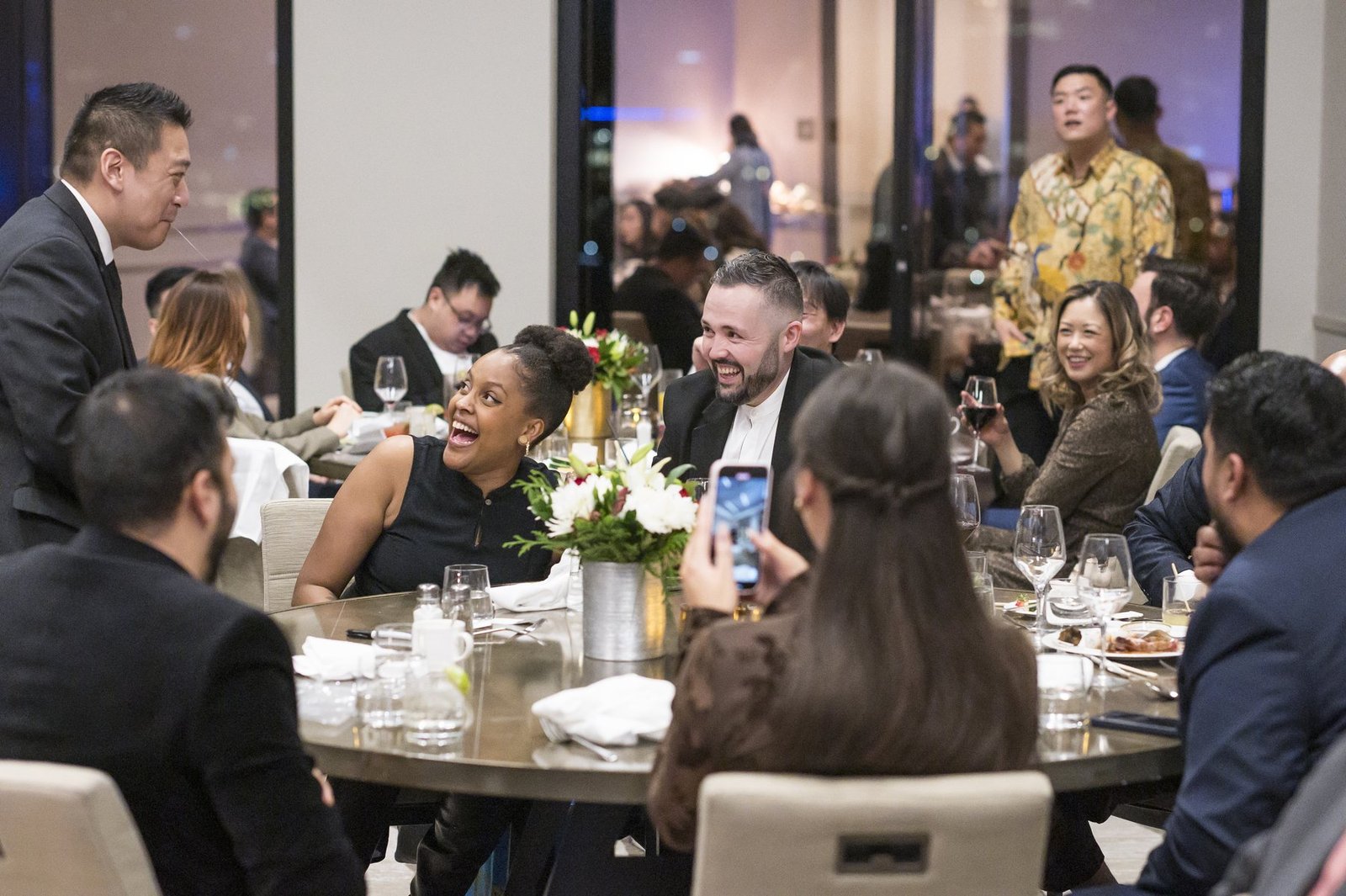
Most event planners think about the big moments first: the meal, the speeches, the awards, the first dance, or the after-dinner entertainment. But guests often remember how the room felt in the spaces between those moments.
If the gaps are too long, people drift, check their phones, or stay only with the people they arrived with. If the gaps are handled well, guests keep talking, laughing, and feeling like the night is moving with purpose.
Why the in-between moments matter
Speeches and formal program pieces naturally change the energy of the room. Guests listen, applaud, reset, and then wait for what comes next. That reset can feel smooth and social, or it can feel like dead time.
The goal is not to fill every second. The goal is to give guests just enough shared interaction that the event stays warm. A strong entertainment plan helps people feel included before the next formal moment begins.
Where guest engagement often drops
For Vancouver dinners, galas, weddings, and company events, the soft spots usually happen in predictable places:
- While guests arrive before the room has fully settled.
- Between dinner courses or while tables wait for food.
- After speeches, when the room needs a lift before the next program item.
- During photo windows at weddings, when some guests are waiting without the couple.
- At receptions where guests do not all know each other yet.
How close-up magic helps without taking over
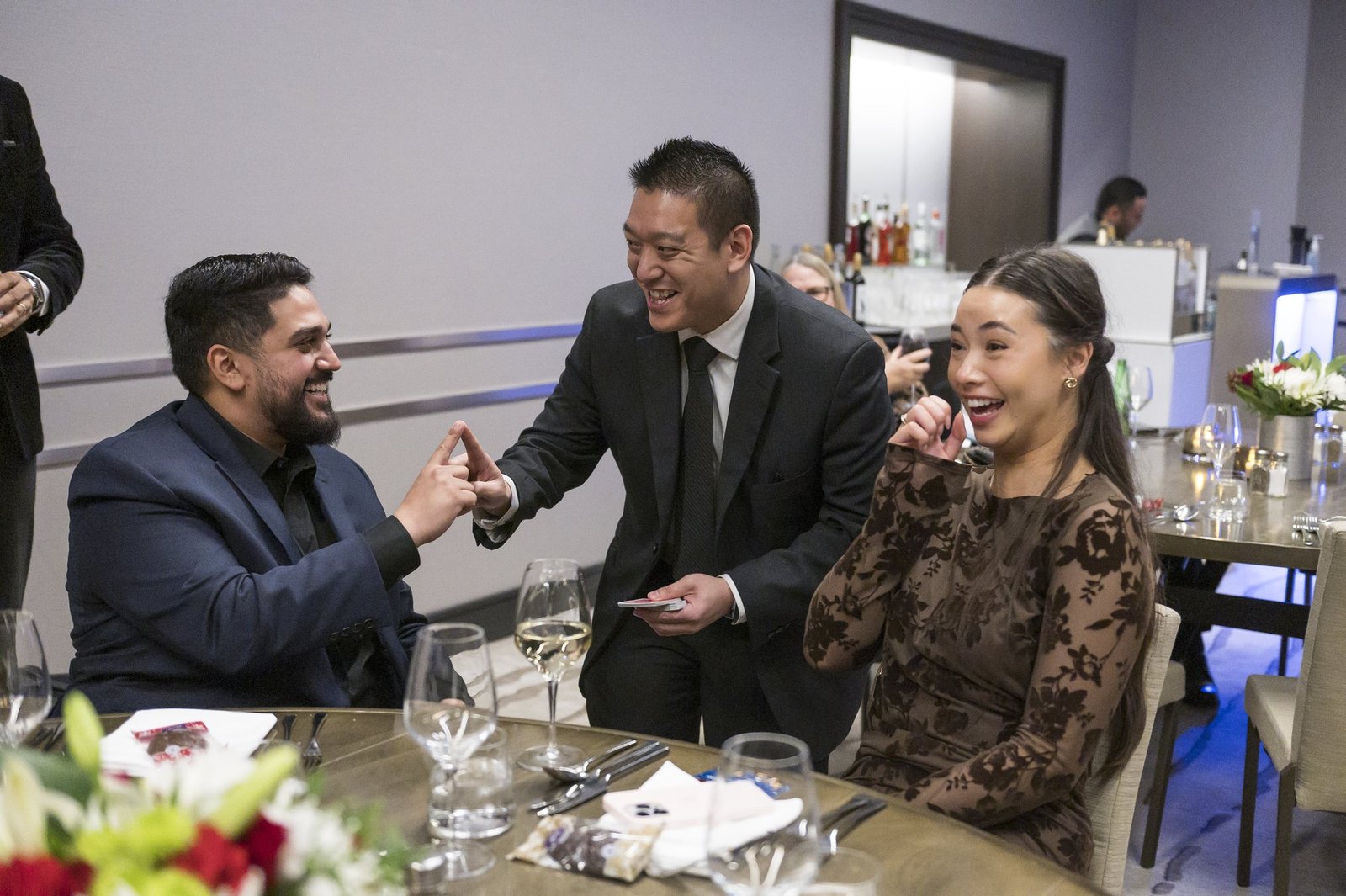
Close-up magic is useful in these moments because it moves with the event. John can visit small groups, tables, or pockets of guests and create impossible moments inches away, often in their own hands. The whole room does not have to stop.
That matters when the event has a formal schedule. Instead of adding another announcement or asking guests to move, the entertainment meets them where they already are. A table laughs, nearby guests turn to see what happened, and the room gradually feels more alive.
When a stand-up magic show is the better choice
If the event needs one shared highlight after dinner or after awards, a stand-up magic show may be the stronger fit. It gives everyone the same interactive moment together and can reset the room before dancing, networking, or the rest of the evening.
For events with both a reception and a formal program, the strongest option is often both formats: close-up magic to warm up the room early, then a stand-up magic show later so everyone shares one peak moment.
What to tell John when you inquire
When checking availability, share the event date, venue or city, guest count, and a rough schedule. The most helpful detail is the feeling you want for the room. Are guests mostly coworkers, clients, relatives, donors, or people who have never met?
With that context, John can recommend whether close-up magic, a stand-up magic show, or the Epic Package of both will support the flow best.
Planning a Vancouver event with speeches or a formal program?
John Ha helps guests stay amazed, included, and connected through interactive magic that fits the schedule instead of interrupting it.
Check availability for your date