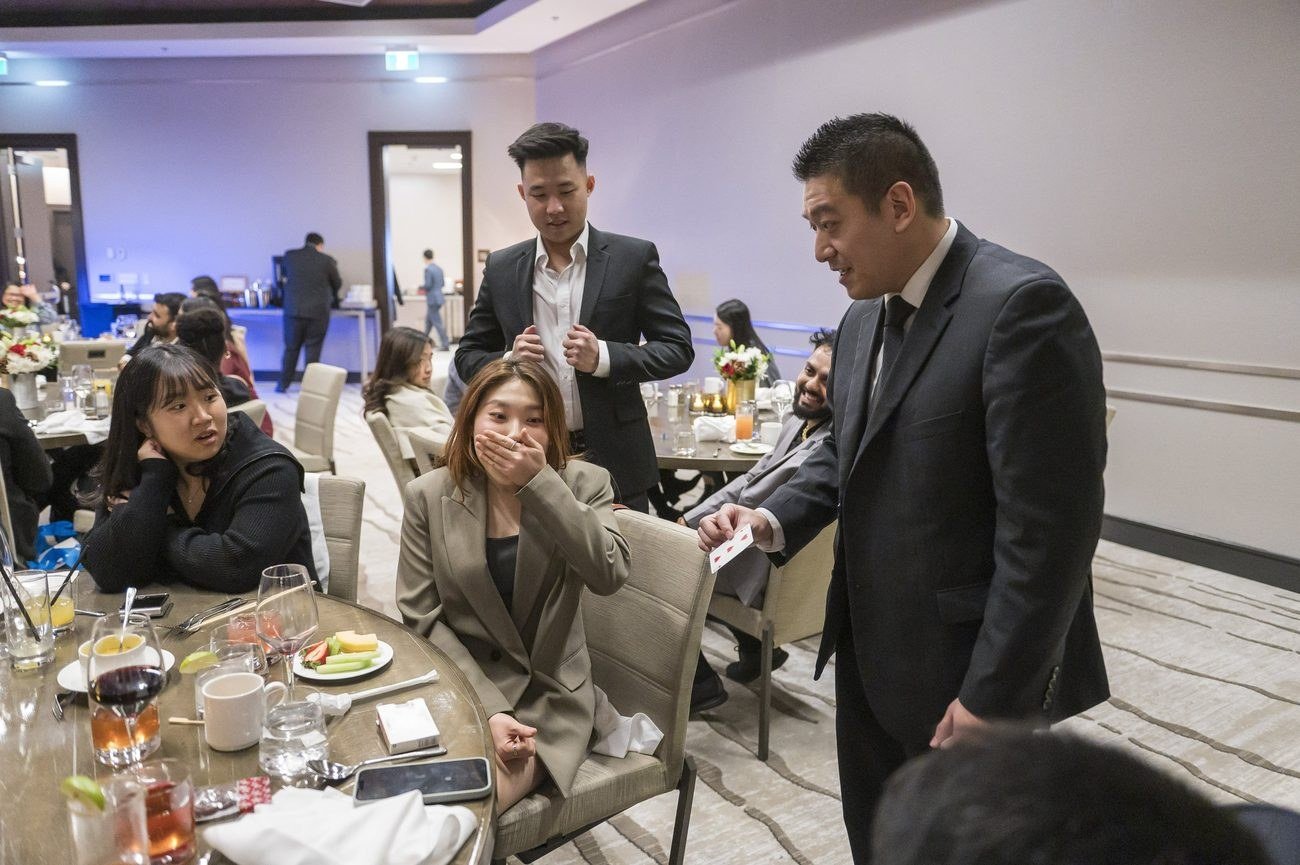
An open house has a different rhythm from a seated gala or stage program. Guests arrive at different times, move through the space, talk to hosts, look at details, and decide how long to stay. The entertainment needs to lift the room without becoming an obstacle.
John Ha’s close-up magic fits that environment because it is personal, mobile, and easy to pause. He can meet guests where they naturally gather, create a short shared reaction, and then let them continue touring, networking, or speaking with your team.
Why open houses need flexible entertainment
Open-house hosts often want energy in the room, but they also need guests to notice the reason they came: the property, venue, product, office, showroom, gallery, or client relationship. A formal performance can stop movement at the wrong time. Background music alone may not create enough connection.
Close-up magic sits in the useful middle. It gives guests a memorable experience without forcing everyone into one schedule. Small groups can enjoy a few minutes of magic, laugh together, and then keep moving through the event.
Where magic fits in the event flow
- Arrival windows: warm up the room as early guests enter and avoid the awkward quiet before the event feels full.
- Tour transitions: engage guests who are waiting for a host, guide, elevator, demo station, or walkthrough.
- Networking pockets: give clients, neighbours, vendors, and VIP guests an easy shared topic.
- Food and beverage areas: add energy near the natural gathering points without blocking service.
- Final hour: keep the room from fading as guests cycle in and out.
What guests experience
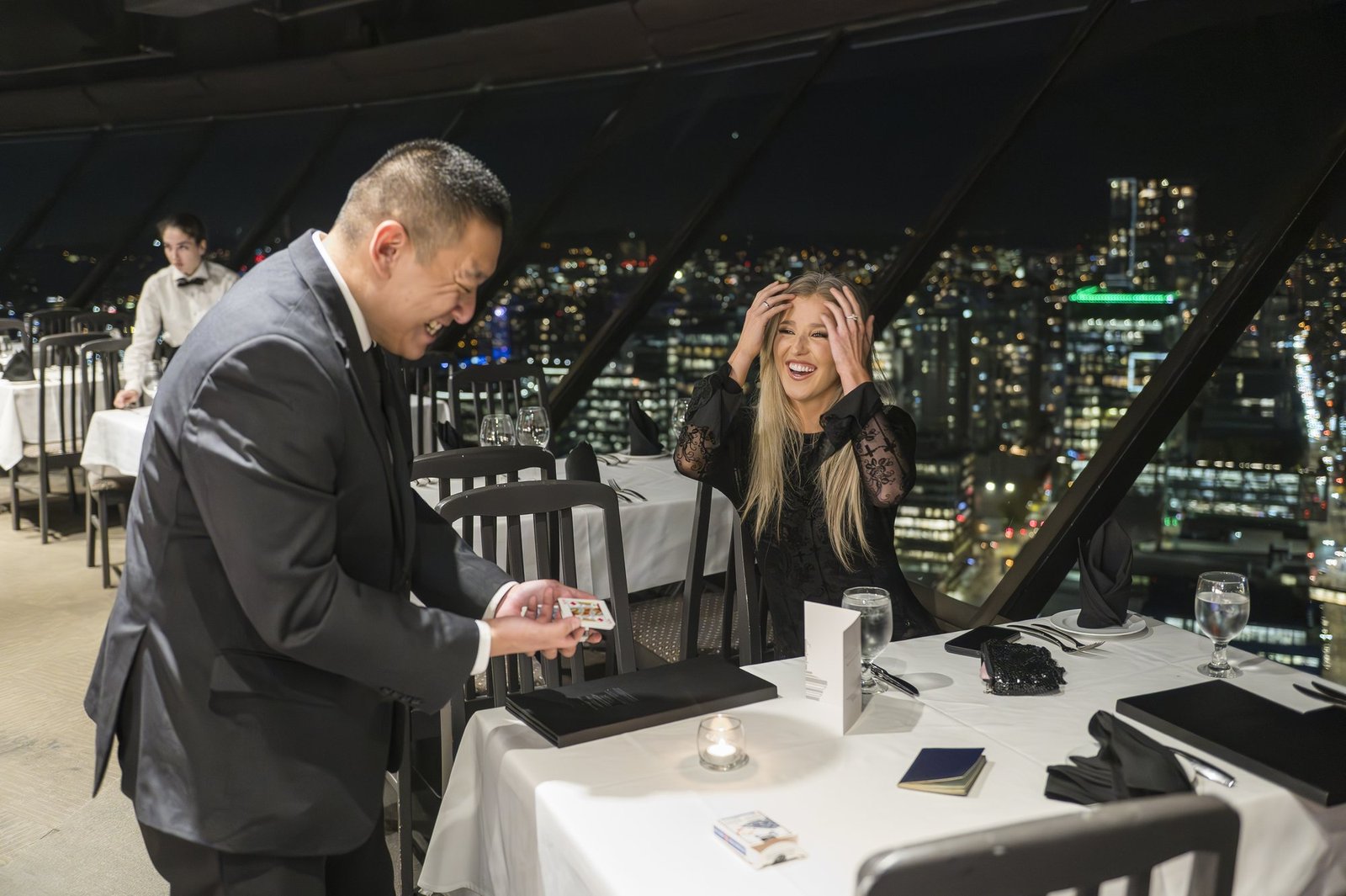
The strongest open-house entertainment should feel like a polished welcome, not a distraction. John performs close-up moments with cards, borrowed objects, and interactive mind-reading-style pieces that happen in guests’ hands and conversations.
Because the magic happens in small groups, guests can react naturally. A realtor can keep speaking with prospects, a brand team can continue demos, a venue manager can keep showing rooms, and a planner can keep the timeline moving.
How to plan the timing
Most open houses work best with a roaming close-up magic window of 60 to 120 minutes, depending on guest count and arrival pattern. If people will come and go over several hours, place the entertainment during the busiest overlap rather than the full event duration.
If you have a speech, ribbon cutting, toast, sponsor moment, or scheduled demonstration, John can pause before that moment and resume afterward. This keeps the attention where it belongs while still giving guests something memorable before and after the formal beat.
Room layout tips for planners and hosts
Share the floor plan, expected guest flow, and any areas that must remain clear. For real estate and venue previews, John can avoid tight doorways, staircases, and display zones. For showrooms and product events, he can work near refreshment areas or lounge clusters so demos and sales conversations stay uninterrupted.
Good open-house entertainment should also make hosts look organized. When guests are waiting, John gives them something to enjoy. When the host team is ready, guests can naturally return to the tour, sales conversation, or relationship-building moment.
What to share when checking availability
When you inquire, include the date, city, venue or property type, expected guest count, event hours, whether guests arrive all at once or drop in, and any moments that need the room’s attention. It also helps to share the event goal: lead generation, client appreciation, community connection, venue preview, brand launch, or VIP hosting.
With those details, John can recommend the best performance window and positioning so the magic supports the open house instead of competing with it.
Planning an open house or client drop-in around Vancouver?
John Ha helps hosts create polished, memorable guest experiences with close-up magic that keeps people comfortable, engaged, and talking while the event stays easy to move through.
Check availability for your event