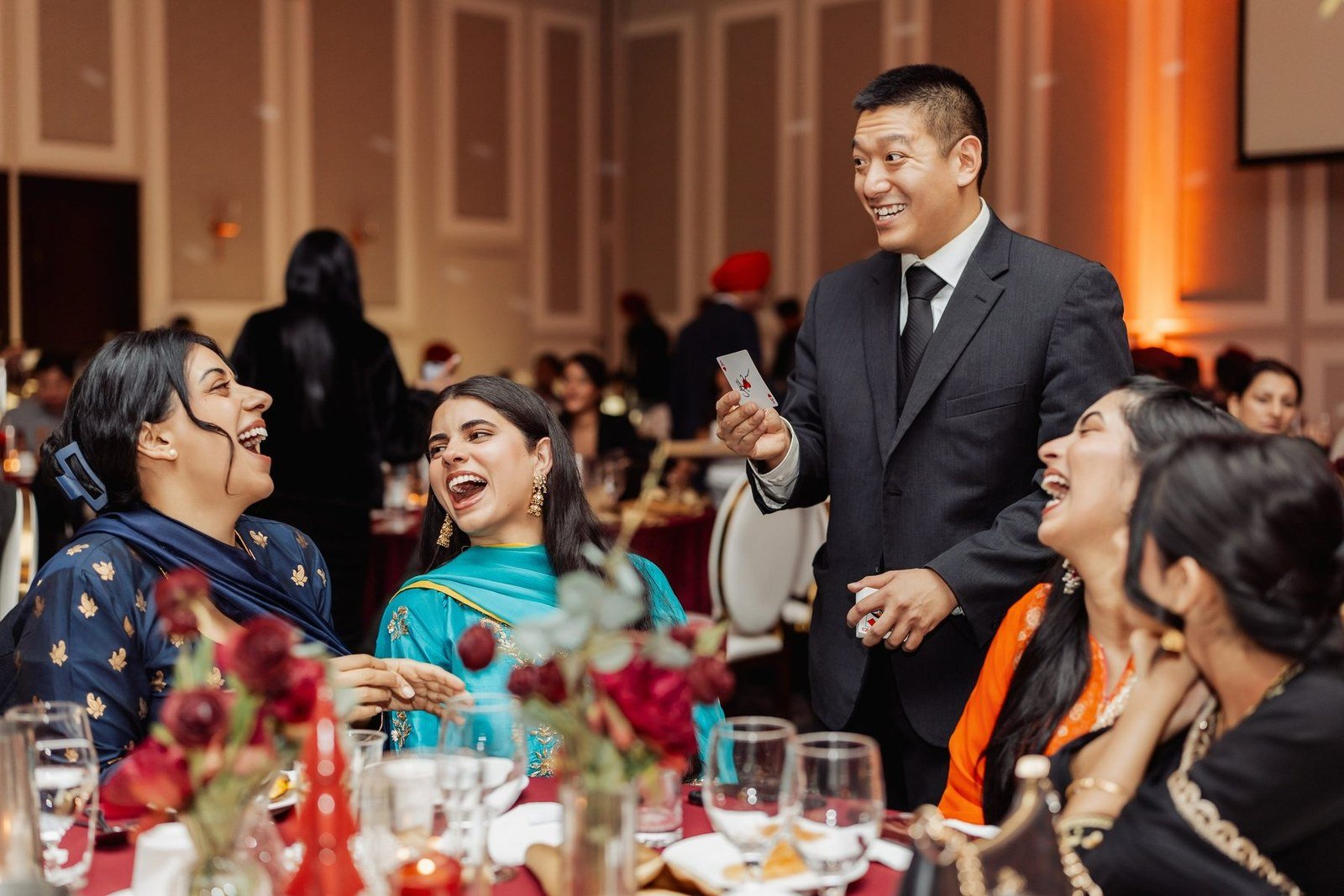
A venue walkthrough is not only for floor plans, catering tables, and AV. It is also the moment to decide how guests will feel during the parts of the event that are easiest to overlook: arrivals, transitions, cocktail time, dinner gaps, and the minutes before the main program begins.
If entertainment is added after the schedule is locked, it can end up squeezed into the wrong place. When you plan it during the walkthrough, close-up magic can make waiting feel intentional, help guests meet each other, and give the host a polished experience without adding stress.
1. Mark the natural gathering points
Walk the route a guest will actually take: entrance, coat check, registration, bar, photo area, cocktail space, dining room, patio, and washrooms. Notice where people will slow down or stand in small groups.
Those are usually the best spots for roaming close-up magic. John can meet guests where they already are, create a short shared reaction, and move on before a group feels held in place too long.
2. Protect arrivals from feeling like a line
Many events lose energy in the first twenty minutes because guests are waiting: waiting to check in, waiting for a drink, waiting for colleagues, or waiting for the room to fill. Close-up magic can turn that loose time into a welcome moment.
- Is there a lobby or foyer where guests pause before entering?
- Will a bar line form near the entrance?
- Can entertainment happen without blocking staff or signage?
- Is there a quieter corner for VIPs, sponsors, or family members?
The goal is not to create a crowd at the door. The goal is to make early guests feel looked after while the event naturally fills.
3. Decide whether the event needs roaming magic, a show, or both
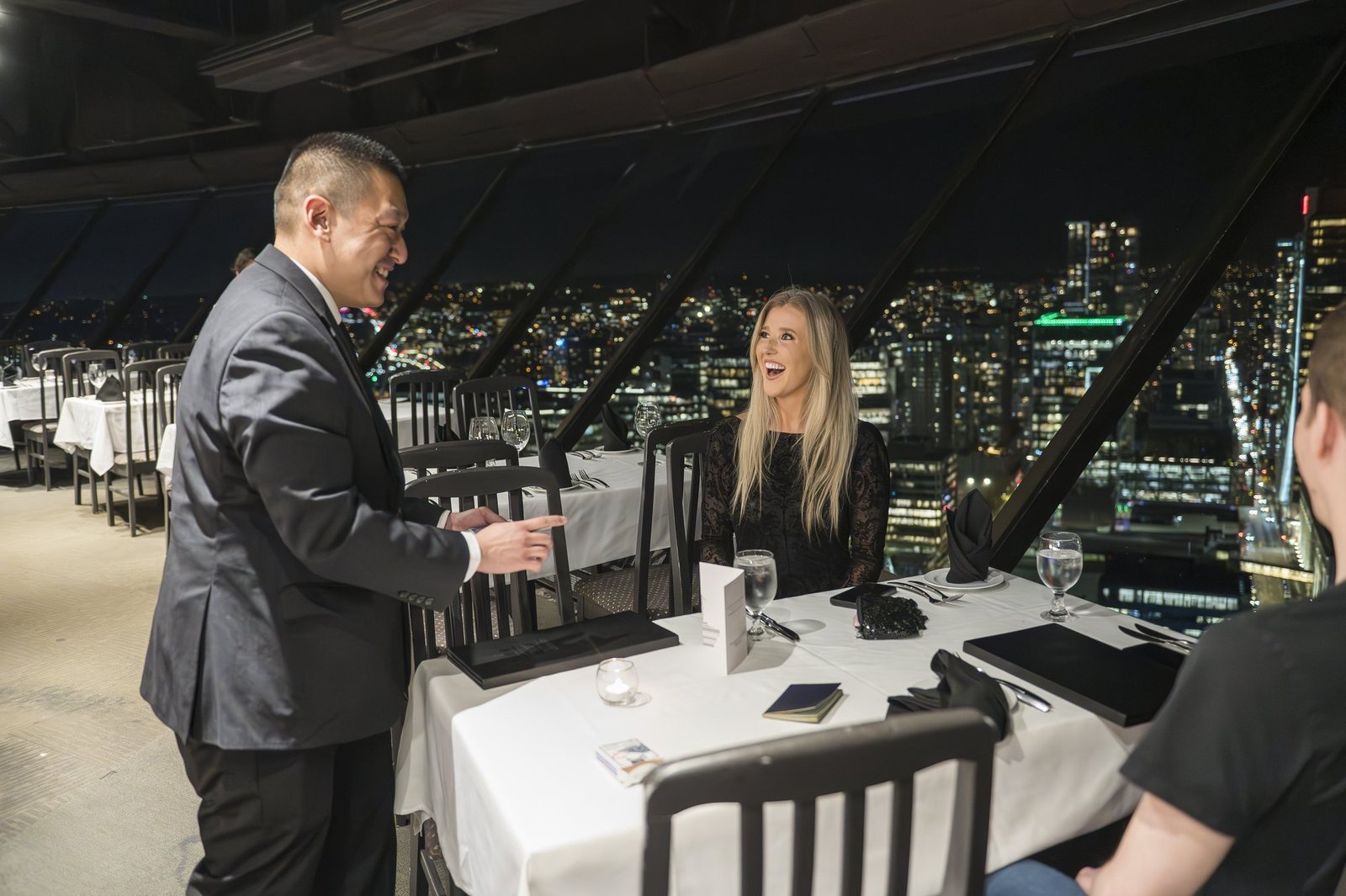
Roaming close-up magic is ideal when guests are standing, mingling, moving between food stations, or seated at small tables before the formal program. It keeps the event social and flexible.
A stand-up magic show works best when the host wants one shared highlight for the whole room: after dinner, before awards, between speeches, or as a clean transition into the next part of the evening. During the walkthrough, look for a spot with clear sightlines and minimal distractions behind the performance area.
4. Check sound, lighting, and sightlines early
Close-up magic usually needs very little production, but the environment still matters. Loud DJ sound, dark corners, tight service lanes, or a performance position beside a busy bar can make it harder for guests to relax into the moment.
For a stand-up magic show, confirm where the audience will face, whether everyone can see, and whether the room has a microphone, house sound, or a simple lighting focus. A small adjustment during the walkthrough can make the show feel much more polished on event day.
5. Build entertainment around food and speeches
Food service and remarks should stay protected. Close-up magic can fill the gaps around those moments, but it should not compete with servers carrying plates, a host trying to make a toast, or guests eating a main course.
For dinners, strong windows often include cocktail hour, the first part of seating, between courses, dessert, or the period before the formal show. For receptions, the best window is usually the open mingling time before the host gathers attention.
6. Choose one backup plan
Vancouver events often include patios, rooftops, hotel ballrooms, private dining rooms, and mixed indoor-outdoor layouts. Weather, noise, room flips, or late arrivals can change the plan quickly.
During the walkthrough, choose one backup area where John can continue performing if the original cocktail zone gets crowded, if speeches run long, or if guests move indoors. A simple backup plan keeps the experience calm for the host.
7. Share the guest outcome, not only the schedule
When you inquire about availability, include more than the date and guest count. Share what you want guests to feel: welcomed, energized, appreciated, connected, surprised, or ready for the formal program.
That outcome helps John recommend the right mix of close-up magic, timing, and optional stand-up magic show so the entertainment supports the reason you are gathering people in the first place.
Planning a Vancouver event walkthrough?
Send the venue, guest count, schedule draft, and the moments where guests may be waiting or mingling. John can help you choose the entertainment window that makes the room feel alive without adding complexity.
Check availability for your event